
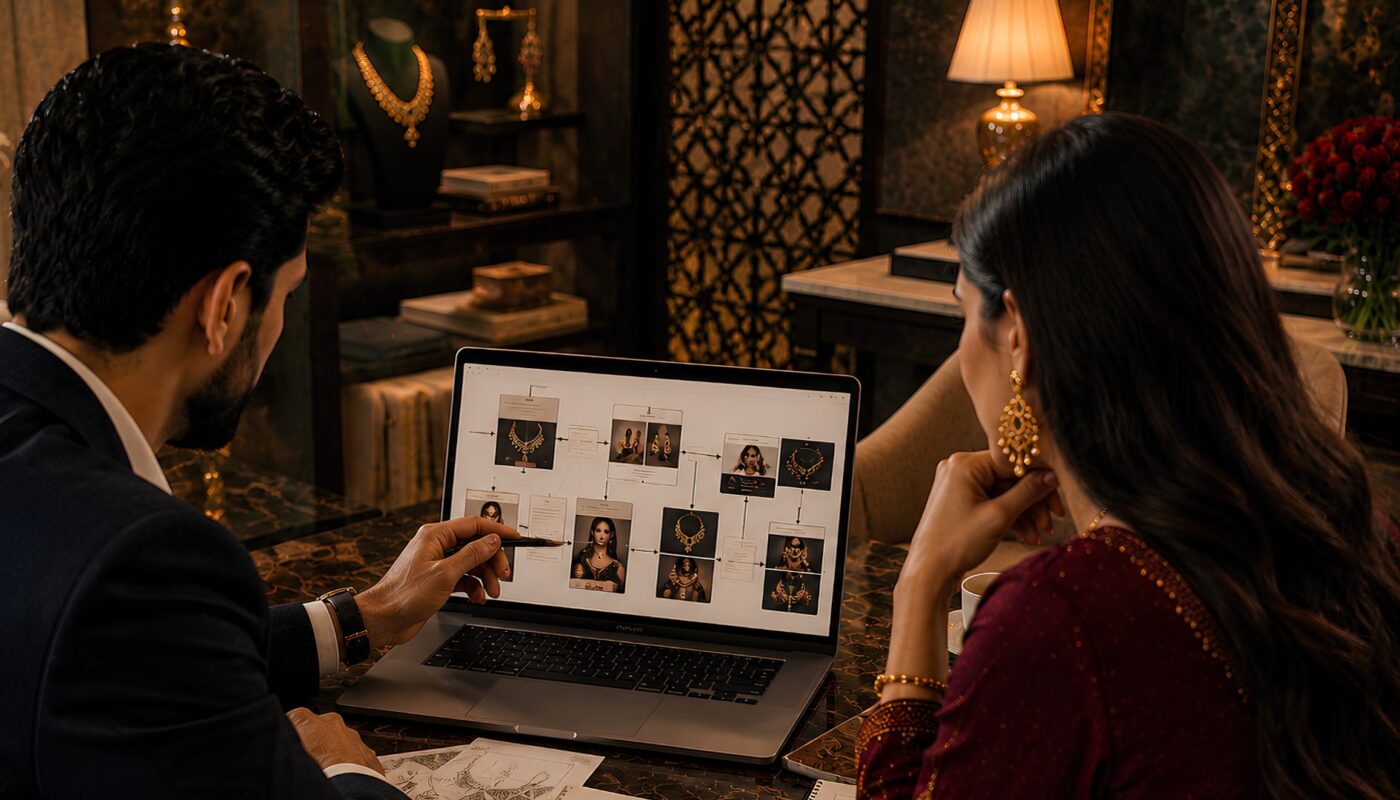
Online marketing can turn a beautiful jewellery lookbook from a passive collection of images into a structured path towards a bespoke consultation. The photography may create the first emotional response, but the surrounding content, page journey and calls to action determine whether that interest develops into a serious enquiry.
For bespoke jewellers and cultural jewellery brands, lookbooks are especially valuable because buyers often begin with inspiration rather than a fixed design. They may know the feeling, symbolism or occasion they want to express without knowing the exact pendant, diamond shape, chain or setting. A well-planned visual journey gives them space to discover their preferences before inviting them to speak with a specialist.
The aim is not to make every image immediately transactional. Strong online marketing allows the lookbook to inspire first, educate second and encourage consultation when the buyer has enough confidence to take the next step.
Why Jewellery Lookbooks Need an Online Marketing Strategy
A lookbook can display craftsmanship, styling and design range more effectively than a conventional product grid. However, attractive images alone do not explain what can be customised, how the process works or why the viewer should enquire.
Online marketing gives each visual a commercial purpose without reducing its luxury appeal. A close-up can demonstrate setting detail. A model image can show proportion. A sequence of related designs can help the viewer compare personal styles. Supporting text can then explain which features may be adapted during a bespoke commission.
Visitors also arrive with different intentions. Some are gathering ideas, others are comparing jewellers and a smaller group may be ready to book. The lookbook should support all three without pressuring early-stage visitors or hiding the consultation route from high-intent buyers.
Design the Lookbook Around Visual Product Discovery
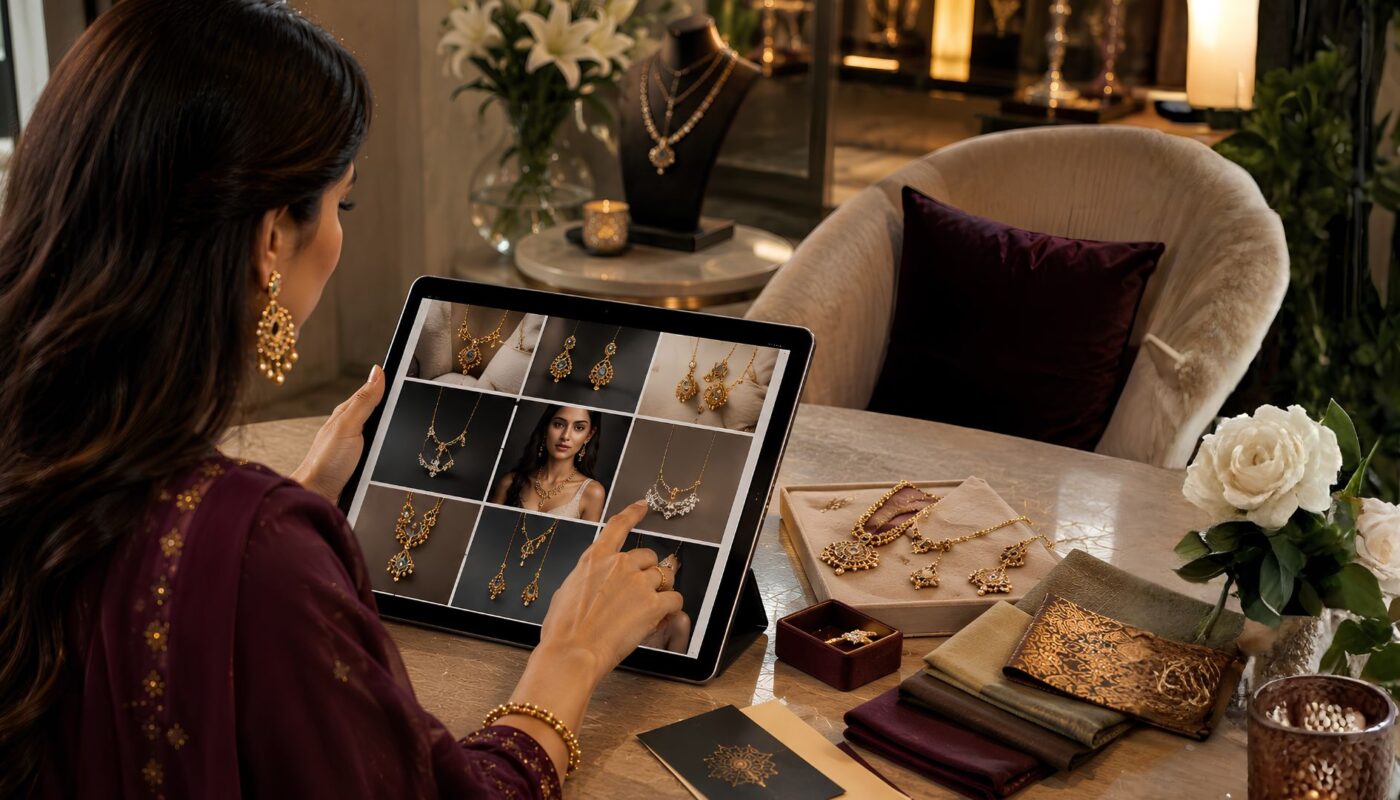
Visual product discovery works best when the collection is organised around decisions a buyer can understand. Instead of presenting an endless gallery, group images by design feature, occasion, silhouette, metal, stone shape or level of detail.
For example, one section might explore minimal pendants, while another shows diamond-led statement designs. A cultural jewellery lookbook may compare traditional motifs, contemporary proportions and pieces designed for regular wear.
Each image should answer a question. How does the piece sit on the body? How does yellow gold compare with white gold? Can the pendant be made more understated or elaborate?
Keep captions concise but useful. Mention the material, design influence and adaptable features. Specific information helps the viewer recognise what they would like to discuss during a consultation.
Connect Inspiration Content to Bespoke Jewellery Enquiries
Online marketing should help jewellery inspiration content move visitors from “I like this” to “I understand what I want to ask for”. That shift is essential for generating better bespoke jewellery enquiries.
Place helpful links beside relevant groups of images. A gallery focused on diamond shapes can lead to a buying guide. A collection showing different metals can link to material guidance. A bridal lookbook can connect to information about design timescales and private appointments.
The consultation call to action should describe the benefit rather than simply saying “Contact us”. Invite the visitor to discuss ideas, compare options, explore personalisation or understand the design process. This makes the next step feel useful even when the final piece has not been decided.
A specialist digital marketing agency can help connect lookbook engagement with landing pages, retargeting and enquiry tracking while preserving the premium tone of the brand.
Use Cultural Storytelling with Accuracy and Restraint
For cultural jewellery brands, the lookbook should do more than borrow visual symbols. It should give the viewer enough context to understand why a design matters and how it has been interpreted.
This is particularly important when presenting pieces such as mangalsutras, where meaning, marriage, personal identity and modern wearability may all influence the buying decision. The content should respect the tradition while allowing different clients to express it in a way that feels personal.
Avoid treating culture as a decorative theme. Explain specific design influences, acknowledge variation between families or communities and avoid suggesting that one style represents every buyer.
Online marketing should amplify the jeweller’s knowledge rather than replace it with trend-led language. The designer or cultural specialist should remain involved in approving descriptions, imagery and campaign concepts.
Build Consultation Booking into the Page Journey
Consultation bookings become more likely when the lookbook answers practical questions before asking for commitment. Buyers may want to know whether consultations are complimentary, whether they can be held online, how long a commission takes and what budget information is helpful.
Include a concise explanation near the main call to action. Keep the booking form short and ask only for information the team will genuinely use, such as the occasion, preferred style, approximate budget and desired timeframe.
Provide more than one route where appropriate. A high-intent visitor may want to book immediately, while another may prefer to submit inspiration images or ask a question first.
Online marketing can also follow up with visitors who explored the lookbook but did not enquire. Carefully targeted remarketing can reintroduce the design process or consultation service without repeatedly showing the same image.
Make Social Content Part of the Lookbook Journey
Social platforms are often where visual product discovery begins. A close-up video, styling reel or carousel can introduce a design before directing the viewer to a fuller lookbook.
The landing experience should continue the same story. If the social post focuses on contemporary chain styles, the linked page should open near that content rather than sending the visitor to a general homepage.
Use social content to reveal the bespoke process through sketches, stone selection, setting work and final presentation. The strongest posts create curiosity, while the website provides the depth needed for a consultation decision.
A digital marketing agency can coordinate paid and organic campaigns so the audience, message and landing page remain aligned across the buyer journey.
Measure More Than Lookbook Views
Page views show that the lookbook attracted attention, but they do not reveal whether it supported commercial intent. Track interactions that indicate deeper interest.
Useful signals include time spent with specific collections, clicks to the bespoke process, saved designs, gallery engagement and completed enquiry forms. These actions show which visual themes are producing serious consideration.
Review enquiry quality as well. A lookbook is working when clients arrive with clearer preferences, relevant questions and realistic expectations. Online marketing should expand the sections that support qualified enquiries and improve areas where visitors browse without moving forward.
Turn a Lookbook into an Enquiry Journey
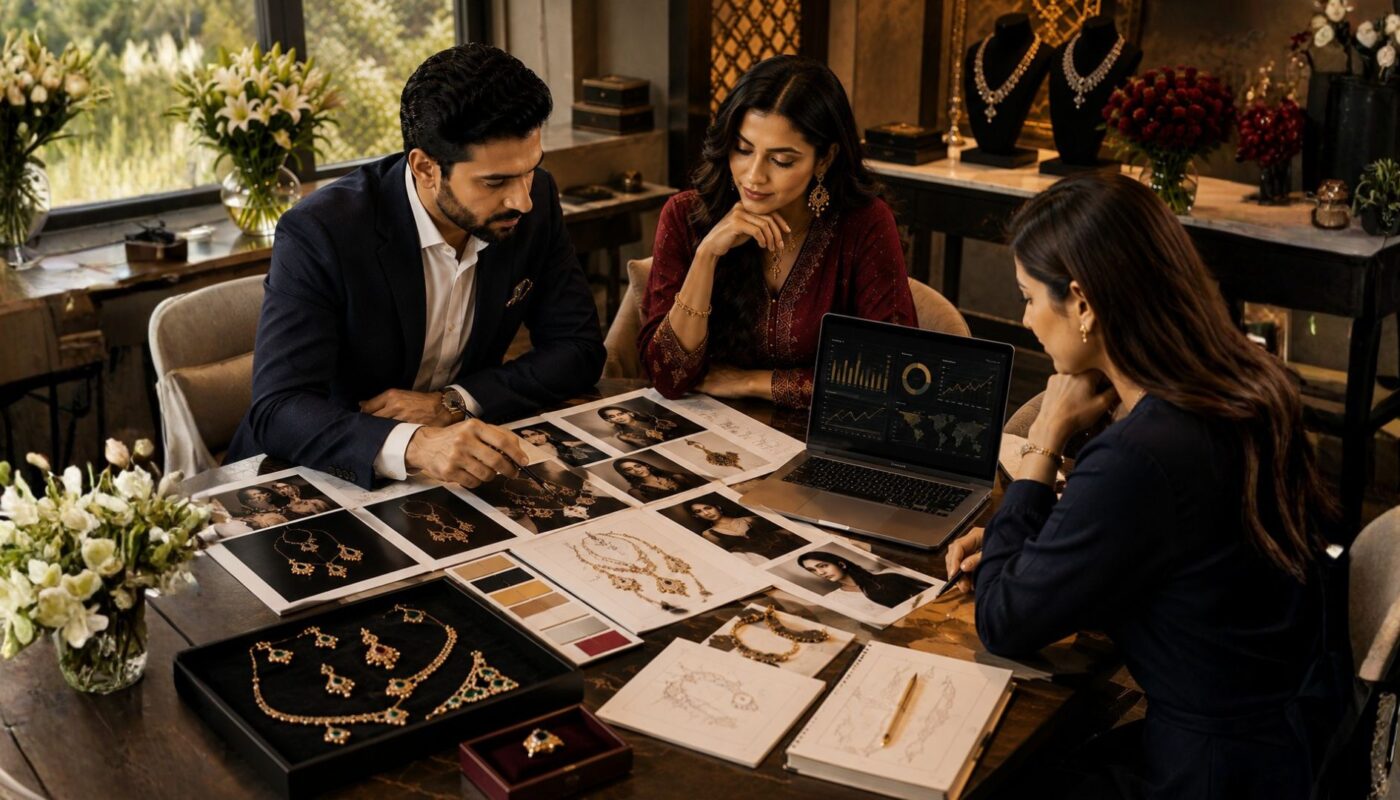
Begin by reviewing the lookbook as a buyer, not as the designer. This keeps online marketing focused on the client journey rather than internal preferences. Check whether the image order helps someone compare options or merely reflects the order in which the photographs were produced.
Group the collection around meaningful choices. Add short captions that explain materials, proportions, symbolism and possible personalisation without overwhelming the visuals.
Place consultation prompts after moments of strong interest. A call to action works well after a distinctive collection, a detailed craftsmanship section or an explanation of the bespoke process.
Show what happens after booking. A short outline covering discovery, design development, approvals, crafting and final delivery can make the service feel transparent.
Finally, connect analytics with the sales team. Record which designs or pages influenced each enquiry so future online marketing can focus on the inspiration that leads to valuable conversations.
Common Mistakes Jewellery Brands Should Avoid
One mistake is treating the lookbook as a collection of campaign images with no clear order. Beautiful photography still needs a user journey.
Another is hiding practical information to protect a sense of exclusivity. Premium buyers value clarity about the consultation process, personalisation and expected timescales.
Brands can also weaken trust by using cultural references without enough explanation. Every visual and description should support accurate, respectful storytelling.
Finally, avoid sending all social traffic to the first page of the website. Direct each campaign towards the most relevant visual and consultation path.
From Visual Inspiration to Personal Design
A successful jewellery lookbook does not end when the visitor admires an image. It helps them recognise their preferences, understand what can be personalised and feel ready to begin a conversation.
Online marketing provides the structure around that visual experience. It connects inspiration content with education, cultural context, consultation booking and measurable follow-up.
For bespoke jewellers, the strongest result is not simply more traffic. It is a steady flow of informed clients who arrive with meaningful ideas and confidence in the design process. When every image supports that journey, online marketing can turn quiet admiration into valuable bespoke consultation enquiries.
Frequently Asked Questions
A lookbook can generate consultations by organising images around buyer choices, explaining personalisation and placing clear booking prompts beside the most relevant content.
It should include strong product details, worn images, different angles, materials, design variations, concise captions and a clear explanation of the bespoke process.
Jewellery buyers often recognise their preferences by comparing shapes, proportions, metals and styling. Visual discovery helps them form clearer ideas before speaking with a designer.
Cultural jewellery should be presented with accurate context, respectful language and clear acknowledgement of its meaning. Contemporary styling should not erase the tradition behind the piece.
Useful metrics include engagement with image galleries, clicks to bespoke pages, consultation bookings, enquiry quality and the designs mentioned during client conversations.